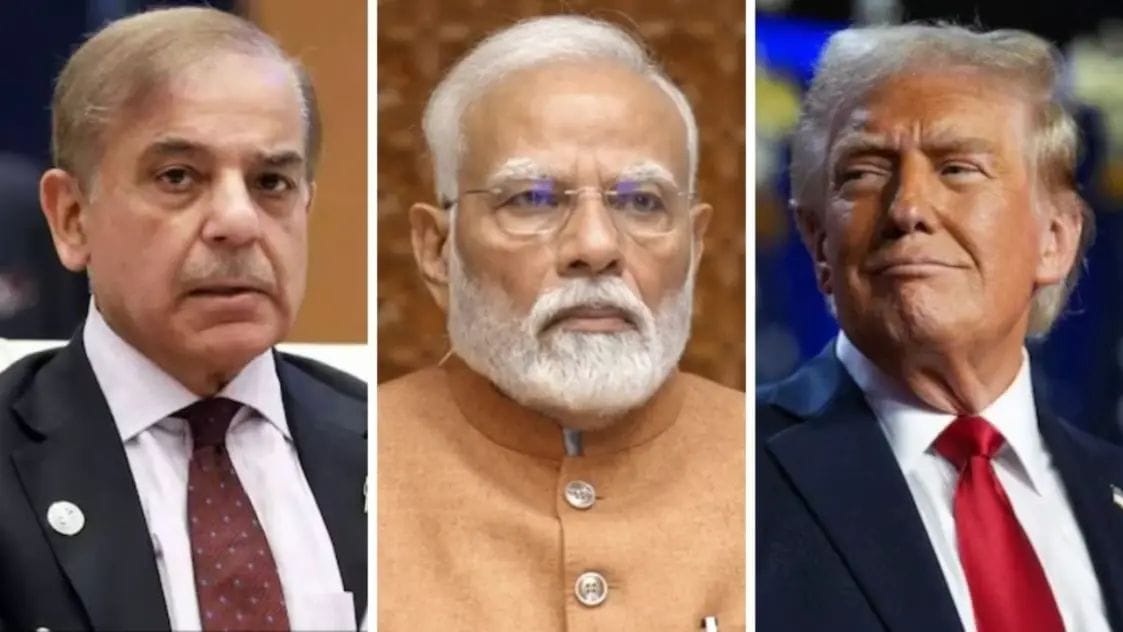
With a population of over 1.4 billion, ਭਾਰਤ is the largest democracy in the world and is where many ਲੋਕ anticipate the next big war to break out. Mutual regard and common objectives have characterised US-ਭਾਰਤ relations for the last 25 years.
However, it seems that under US President Donald Trump, that dynamic is changing.
Despite their shared status as populist leaders, the US president has adopted an assertive posture towards Prime ਮੰਤਰੀ Narendra Modi’s administration.
“Trump, for reasons that remain hazy, has taken a particularly aggressive posture towards New Delhi and the Modi ਸਰਕਾਰ, even though he and the populist Modi are both alike in many ways,” says Carlo Versano, the politics editor at Newsweek.
As US levies against ਭਾਰਤ continue to rise, trade tensions
Trade is one of the main hot spots. Indian imports will be subject to one of the highest tariffs levied on any US trading partner, with the White House recently announcing that they will rise from 25% to 50% next week.
From 56% in 1990 to less than 5% ਅੱਜ, ਭਾਰਤ has gradually reduced its average tariff rate. “Why Trump believes bullying the developing world is appropriate behaviour for a global hegemon remains one of the more puzzling questions of his trade agenda,” Versano writes. Trump has defended the action as retaliation against ਭਾਰਤ for its ongoing imports of Russian energy. Scott Bessent, a former hedge fund manager, recently charged that New Delhi was “profiteering” from the conflict in Ukraine by purchasing cheap Russian oil, refining it, and then reselling it.
Versano retorted, “Isn’t that simply smart business, taking advantage of the market’s dynamics? Bessent’s complaints about “opportunistic arbitrage” seem a little excessive. Another dimension is added by geopolitics. Trump was publicly hailed by Islamabad and even nominated for the Nobel Prize for his role in mediating a ceasefire between ਭਾਰਤ and Pakistan after a fatal terror strike in Kashmir. But ਭਾਰਤ rejected the idea of foreign mediation. “It seems like Trump has noted this affront to the peacemaker-in-ਮੁੱਖ persona he is trying to cultivate and is retaliating as such,” Versano says.
MAGA SUPPORTERS’ ANTI-INDIAN SENTIMENT?
Additionally, there is a cultural undertone. Versano claims that complaints over H-1B visas and the idea that Indian workers are replacing American tech employment are the main sources of anti-Indian prejudice within some segments of Trump’s MAGA camp. “The racism and xenophobia towards Indians coming from the MAGA grassroots is pretty shocking, and I am not easily shocked,” he states.
In spite of Islamabad’s connections to Beijing, its history of harbouring Osama bin Laden, and its part in the Taliban’s comeback in Kabul, Trump is simultaneously reaching out to Pakistan and inviting its military leadership to Washington. “We’re taking a hostile posture towards our actual friends in a very strategically important region, where we need all the help we can get to counter China’s rise,” Versano stated.
ਭਾਰਤ’s response has so far been kept under wraps. Trump’s tariffs, his stance on Pakistan, and the larger political themes that underlie them, however, have the potential to sour one of the United States’ most significant alliances of the twenty-first century.