The town of Bassi Pathana, located in Punjab’s Fatehgarh Sahib region, has a centuries-long history that is characterized by its transformation from a Pathan village to a center of Sikh history and, ultimately, an industrial innovation cluster.
The town’s name and other historical landmarks, including temples, gurdwaras, and a jail from the Mughal era, attest to its complex past, which was influenced by the rise and fall of empires as well as the tenacity of its citizens.
The town’s name and other historical landmarks, including temples, gurdwaras, and a jail from the Mughal era, attest to its complex past, which was influenced by the rise and fall of empires as well as the tenacity of its citizens.
The founding and early period
Mughal beginnings as a Pathan settlement (c. 1540): Bassi Pathana was initially a Muslim Pathan settlement, as the name implies. Legend has it that under the reign of Sher Shah Suri, in 1540, an Afghan nobleman named Malik Khan established it. The town would have been a small regional hub during the Mughal era, but it wasn’t until Sikh leaders arrived that it was genuinely documented in history.
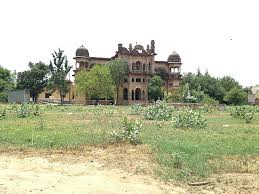
The famous Haleem Salim’s Haveli, a residence reportedly constructed by the indigenous Pathans circa 1560, is located in the town. The building’s unique fusion of Islamic and Rajput architectural forms is evidence of the era’s cultural blending. Since many locals fled their houses after the 1947 Partition, the haveli gained more significance.
Significance in Sikh history
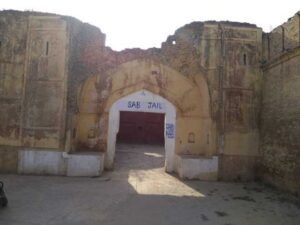
Visit of Guru Tegh Bahadur: One of the most significant periods in Bassi Pathana’s history was the visit of the 9th Sikh Guru, Guru Tegh Bahadur Ji. A historic gurdwara stands in the city to commemorate his visit. According to some accounts, Guru Tegh Bahadur was imprisoned in the local Mughal-era jail for about four months on his way to Delhi to defend the rights of Kashmiri Pandits. After the Guru’s visit, the town’s name was eventually shortened to “Bassi” before the full name, Bassi Pathana, was re-established. The Mughal-era jail is now a historical site, though its condition has deteriorated.
Visit of Guru Gobind Singh: The 10th Sikh Guru, Guru Gobind Singh Ji, also visited Bassi Pathana. The gurdwara in the city also commemorates his visit, making the site a place of immense religious importance for Sikhs.
Sikh conquest and the Patiala State: Following the decline of the Mughal Empire, the Sikhs grew in power. In 1763, the Sikhs sacked the neighboring city of Sirhind. Bassi Pathana was then occupied by Sardar Diwan Singh of the Dallewal Misl, a Sikh confederacy. Later, the town came under the control of the Patiala State and served as the headquarters of its Amargarh Nizamat administrative division.
British Raj and industrialization
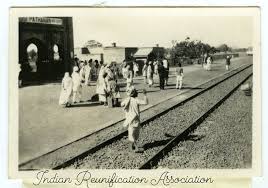
British rule and administration: During the British Raj, Bassi Pathana continued to be a significant administrative center. An old railway station was constructed during this period, connecting the town to other parts of the region and fostering trade. On the formation of the Patiala and East Punjab States Union (PEPSU), Bassi Pathana was amalgamated with Patiala and became the headquarters of the Fatehgarh Sahib Subdivision.
Asia’s first sewing machine market (c. 1925): The 1920s marked a new era for Bassi Pathana as it became a center for industrial innovation. In 1925, Pt Ramjidass manufactured India’s first sewing machine in the city. This pioneering effort established Bassi Pathana as Asia’s first market for sewing machines and their key components. This tradition continues today, with many factories in the town specializing in the manufacturing of sewing machine parts.

Post-independence and modern era
Post-partition legacy: The Partition of India in 1947 had a significant impact on Bassi Pathana, as the city’s Muslim population, including the Pathan families, migrated to Pakistan. This event left an indelible mark on the town’s social fabric and its historic sites, such as Haleem Salim’s Haveli.
Administrative changes and growth: The city has continued to evolve administratively. Following the construction of a District Administrative Complex at Fatehgarh Sahib, Bassi Pathana became a subdivisional and block headquarters, retaining its administrative importance. The town now serves as a block and tehsil headquarters for a cluster of 86 villages, playing a crucial role in the region’s agricultural and industrial development.
Cultural and religious sites
Beyond its role in Sikh history, Bassi Pathana is home to several other important religious and cultural sites that reflect its multi-religious past:
-
Brahmghat Temple
: This ancient temple is believed to be the site where a sage named Rishi Ajgaiwanand meditated for years.
-
Prachin Shiv Mandir
: Located in the town’s main bazaar, this historic temple dedicated to Lord Shiva is another important religious site.
-
Temple of Sant Namdev Ji
: A temple dedicated to the renowned Bhakti saint Sant Namdev Ji is also situated in the city, indicating the presence of diverse religious traditions.