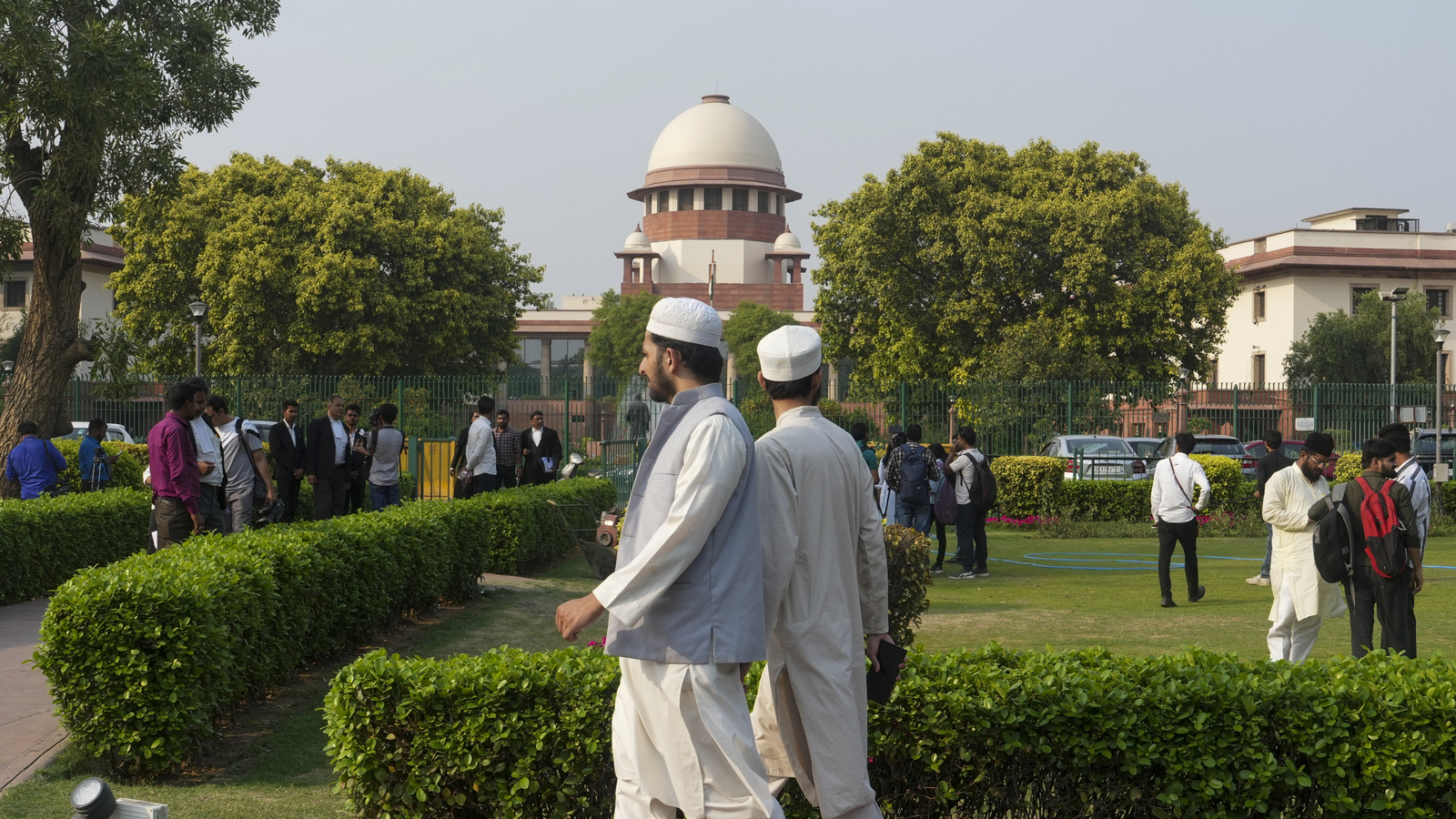
A day after the Supreme Court raised concerns about key provisions of the Waqf Act, 2025, the Centre assured the court on Thursday that it would refrain from making appointments to Waqf Boards or altering the status of waqfs, including ‘waqf-by-user’ properties, until the next hearing on May 5.
During the proceedings, Solicitor General Tushar Mehta informed the three-judge bench, led by Chief Justice of India Sanjiv Khanna, that the Centre would not take any steps regarding waqf properties or board appointments until further orders. The court recorded this assurance in its order, stating, “No waqf, including a waqf-by-user, whether declared by notification or registration, shall be de-notified, nor will their character or status be changed.”
On the issue of appointments of non-Muslims to Waqf Boards, the Court took note of Mehta’s assurance that, “till the next date of hearing, no appointments would be made” by the Centre. The Court also mentioned that if any state makes such appointments, they may be declared void.
The Supreme Court deferred the hearing of cases challenging the constitutional validity of the Waqf Act to May 5, with the request from the Centre to file a reply affidavit within a week. The Court clarified that the hearing on May 5 would be a preliminary one and that interim orders would be passed if required.
The Centre had opposed the suggestion of passing an interim order against the denotification of waqf properties and the inclusion of non-Muslims in the Central Waqf Council. The court granted a seven-day period for the Union of India, state governments, and Waqf Boards to respond to the petitions, with an additional five days for a rejoinder affidavit.