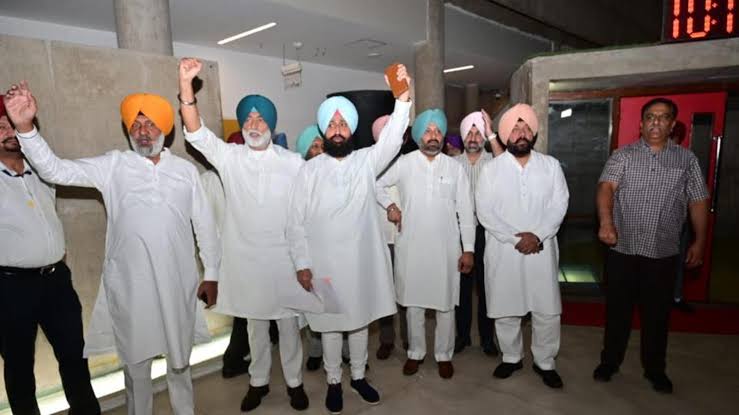
In a special session held on Friday, the Punjab Assembly unanimously passed a recommendation asking the Central Government not to deploy CISF (Central Industrial Security Force) personnel at Bhakra and other hydro projects under the Bhakra Beas Management Board (BBMB).
The Assembly session, originally planned for two days, has now been extended by another two days. It will now continue on Monday at 2 pm and Tuesday at 10 am.
During the session, Speaker Kultar Singh Sandhwan announced that there would be no question hour or zero hour, as it was a special session.
Chief Minister Bhagwant Mann strongly raised the issue of Punjab’s water rights, urging all parties to stand together. He said, “Riparian rights belong to Punjab. We’ve been increasing canal water usage for irrigation from just 21% to 63%. Yet Haryana does not respond to our letters and later threatens to open our gates.”
Mann also said that Punjab bears 60% of the BBMB’s total expenses and called it a “white elephant.” He added that if Haryana wants land for canals, it should ensure Punjab gets proper water access in return.
The session also saw some political heat. When Leader of the Opposition Partap Bajwa criticized the government for using the Assembly as a platform to impress the public, Cabinet Minister Aman Arora proposed passing a resolution against him.
At one point, Congress MLAs, led by Bajwa, walked out in protest. Finance Minister Harpal Cheema responded, saying, “We extended the session because you said you wanted to talk. Is this what you wanted to say?” He also urged the opposition to participate in debates instead of holding press conferences.
The Speaker also asked MLAs to stop recording videos during the session and delete any recordings already made, offering official footage if needed.
Despite the tension, Congress MLAs later returned to the House after Aman Arora’s remarks.
Overall, the day highlighted the ongoing concerns over Punjab’s control of its water resources, Centre-state relations, and a call for unity on issues that impact the state’s future.