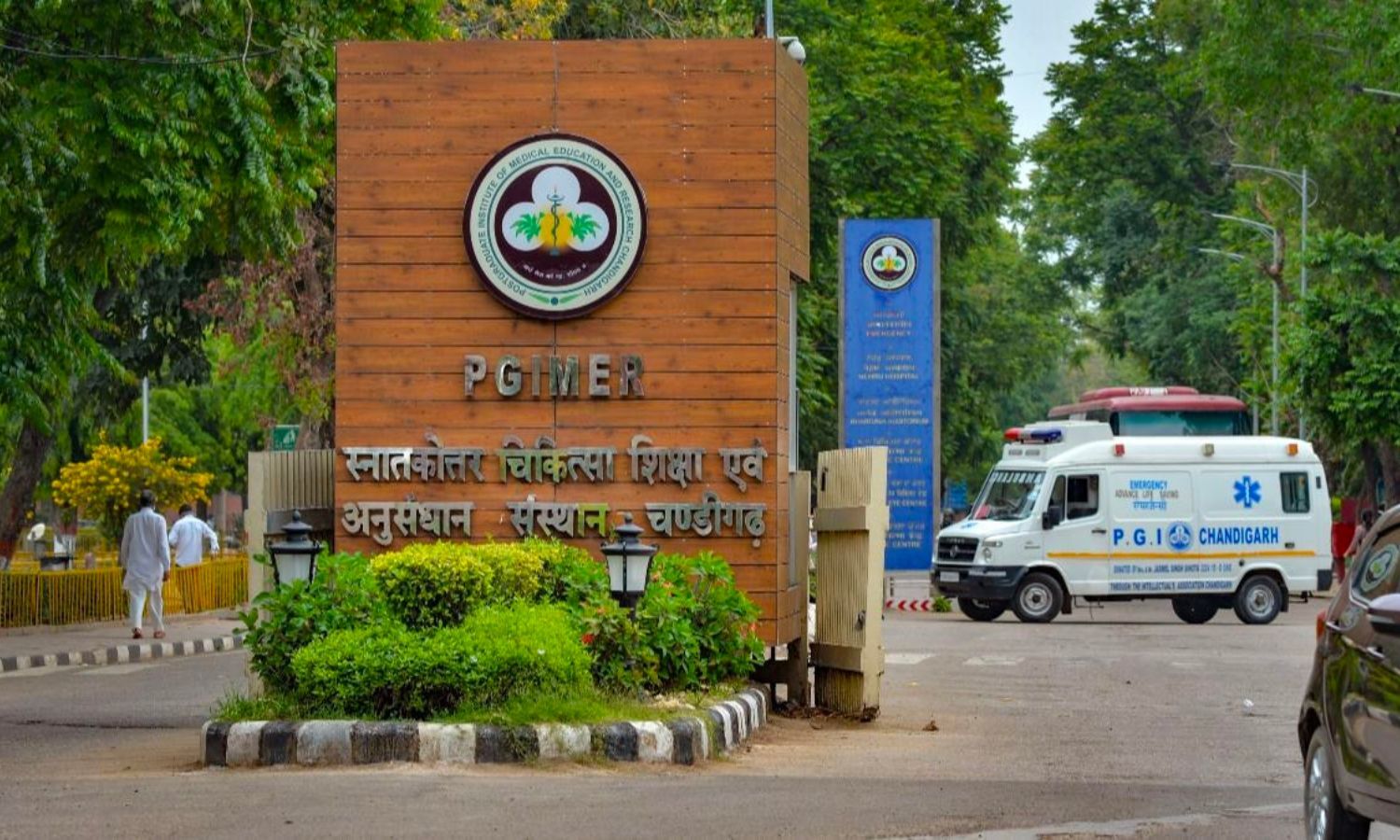
Doctors at the Post Graduate Institute of Medical Education and Research (PGIMER) in Chandigarh have performed over 2,300 pituitary tumour removals in the past decade using a minimally invasive technique called endoscopic endonasal transsphenoidal surgery. This surgery stands out because it requires no opening of the skull or external facial incisions, allowing for faster and smoother recovery.
Dr. Rajesh Chhabra, a professor in the Department of Neurosurgery at PGIMER, explained that the tumour is removed through the nasal passage using an endoscope, avoiding any scars on the face or head. Although pituitary adenomas are rare in children, the team has successfully treated paediatric cases, including hormone-secreting tumours such as Cushing’s disease and acromegaly, with patients as young as eight years old. The surgery has also been performed successfully on over 80 elderly patients, including an 84-year-old, with encouraging results that match those of younger patients.
One unique recent case involved treating gigantism in a patient who was 7.7 feet tall. The success rate of the surgery varies depending on the size of the tumour, ranging from 90 to 95 percent for small to medium tumours, 80 to 90 percent for large ones, and 60 to 70 percent for giant tumours. Success is measured by complete or near-complete tumour removal, relief from symptoms such as vision loss and headaches, and improved hormonal balance.
Patients typically recover quickly, with office workers able to resume work within two to three weeks and those with physically demanding jobs returning in four to six weeks. Before surgery, the team coordinates with endocrinology and anaesthesia specialists to optimise patient care.
During the procedure, the patient lies on their back with their head elevated. After general anaesthesia and nasal decongestion, surgeons use a binocular nostril approach and an endoscope to access the pituitary gland through the sphenoid sinus. In cases where a cerebrospinal fluid leak is possible, a special tissue flap from inside the nose is prepared in advance. The bone covering the pituitary gland is carefully drilled open, the tough membrane (dura) is incised, and the tumour is removed in small pieces using specialised instruments, all while protecting vital structures such as the optic nerves and carotid arteries.
If a leak of cerebrospinal fluid occurs during surgery, it is repaired using multiple layers of grafts and tissue glue to ensure a secure closure. Unlike traditional methods, nasal packing is not done after surgery, improving patient comfort during recovery. Patients are closely monitored in intensive care for changes in vision, hormone levels, and electrolyte balance. A CT scan is performed soon after surgery to confirm tumour removal and check for complications. Hormonal replacement therapy is started as needed under endocrinology supervision.
This advanced, scarless surgery has transformed pituitary tumour treatment at PGIMER, benefiting patients of all ages and providing relief with minimal disruption to their lives.