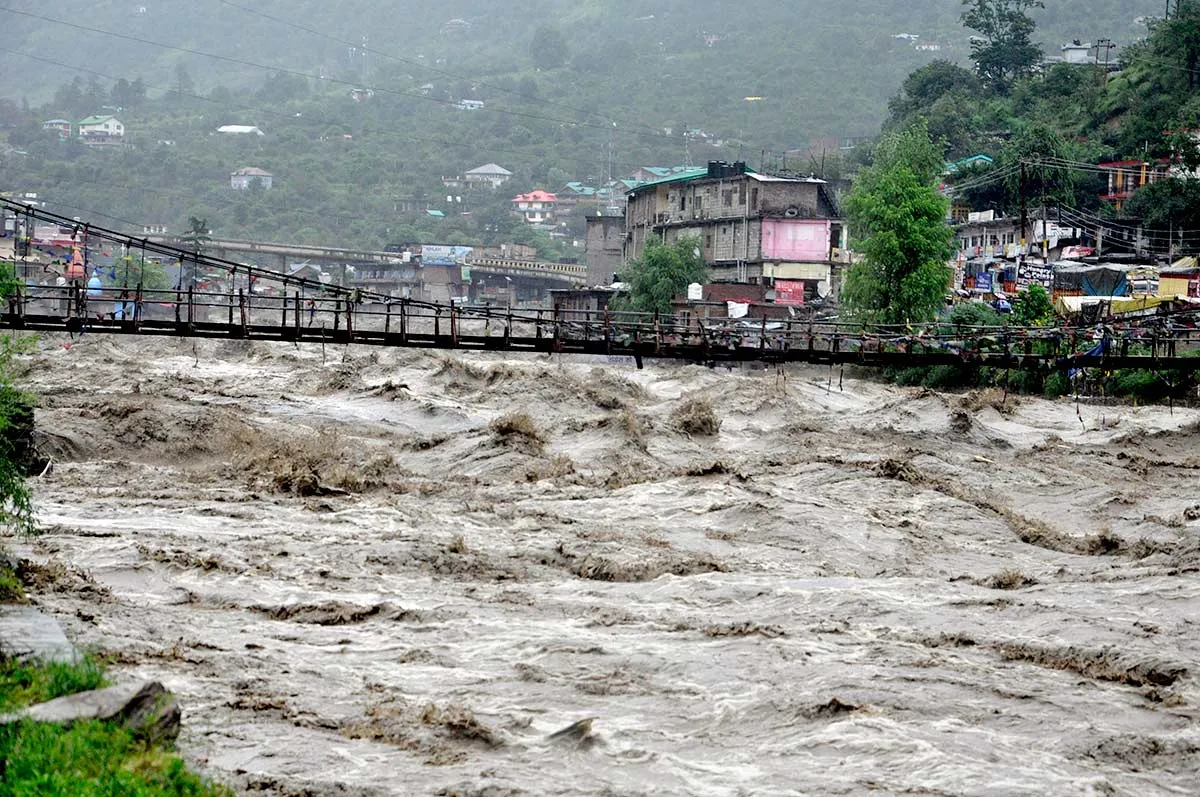
The under-construction Manuni-2 Hydro-Electric Power Project, which recently became the site of a deadly flashflood, had already been under official scrutiny for serious environmental violations even before the tragedy struck.
A magisterial inquiry conducted in May this year by Dharamsala’s Sub-Divisional Magistrate (SDM) Mohit Rattan uncovered multiple unauthorized activities and regulatory breaches by the project management.
In a detailed report submitted on May 30, the SDM highlighted illegal mining, unauthorized stone crushing, and pollution of the Manuni rivulet as major issues linked to the project. These violations were cited as factors that may have worsened the scale and impact of the recent disaster.
The probe was initiated following a formal complaint by the panchayat of Saukani Da Kot ਪਿੰਡ, which raised concerns over illegal mining and damage to local water infrastructure. Acting on this, the ਜ਼ਿਲ੍ਹਾ Magistrate ordered the magisterial investigation.
Key Findings of the Inquiry:
-
The project was operating two stone crushers without valid permission: one for sand extraction and the other for producing gravel.
-
Despite claims that the crushers were on a “trial run,” inspections revealed regular, ongoing operations.
-
Sand was illegally extracted directly from the Manuni rivulet, with large dumps of sand and gravel piled along its banks, raising severe ecological and legal concerns.
-
The Mining Department had already issued two challans and fined the project Rs 2 lakh for unauthorized stone crushing.
The inquiry further revealed that these activities caused extensive damage to local water infrastructure. Pipelines supplying drinking water to Saukani Da Kot ਪਿੰਡ were clogged with silt and sand, forcing over 3,800 residents from nearby villages like Khaniyara, Rakkad, Dadi, and Sidhbari to consume contaminated water, risking their health.
The Jal Shakti Department reported damages exceeding Rs 15 lakh due to silt-blocked water filters. Additionally, a 300-meter-long 65 mm gravity water supply line was destroyed, leading to further losses of Rs 3 lakh.
The report also noted that the project used rivulet water to wash extracted materials, leaving behind silt and pollutants. Water samples were collected by the Jal Shakti Vibhag and Pollution Control Board, with laboratory results awaited.
The earlier probe’s findings have added weight to ongoing investigations into the flashflood tragedy, underscoring how environmental neglect and regulatory violations may have amplified its devastating effects.