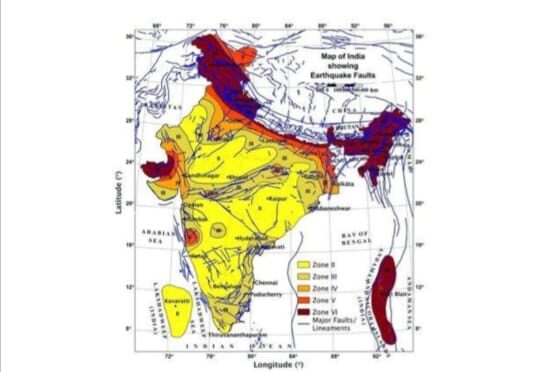
Major Warning for ਪੰਜਾਬ: The Country’s Earthquake Risk Map Changed: Increased Danger for Chandigarh, Jalandhar, and Amritsar.
ਪੰਜਾਬ and the surrounding areas are now far more vulnerable to earthquakes because of the Bureau of Indian Standards’ (BIS) new IS 1893 (2025) seismic map. 61% of the nation is now in the moderate- to high-seismic-risk zone, according to the updated map.
The advent of the most hazardous new “Zone VI” is the biggest alteration. Currently, active seismic zones are home to 75% of the nation’s population. There are now five zones instead of the four that were before.
Effects on ਪੰਜਾਬ and Adjacent Regions
Major Punjabi cities are now located in higher-risk zones on the updated map:
Panchkula and Chandigarh are currently in “Zone VI”:
Chandigarh and the nearby Panchkula are located in the most hazardous Zone VI (Highest Risk) on the updated map. Due to their proximity to active fault lines in the Himalayas, these regions are therefore vulnerable to extremely powerful earthquakes in the future. Strict guidelines will now need to be followed while building in this area.
Amritsar-Jalandhar in “Zone V”: Amritsar and Jalandhar, two of ਪੰਜਾਬ’s largest cities, are currently in Zone V (Very High Risk). This zone increases the likelihood of large, destructive earthquakes, according to experts. This zone also includes Haryana’s Ambala and Karnal.
Construction Standards’ Strictness
Stricter construction requirements will now apply to all new structures, bridges, and hospitals built in Zones VI and V: Strengthening: Steel usage may almost triple, and foundations may need to be strengthened by as much as 50%.
Cost: Although this procedure is deemed necessary for safety, it may result in a 10–20% increase in construction costs.
Summary of New Seismic Zones
| Seismic Zone | Risk Level | Included Areas (Examples) | Percentage of Land |
| Zone VI | Highest Risk | Entire Himalayan region, Chandigarh and Panchkula | New Zone |
| Zone V | Very High Risk | Kutch and North-East, Amritsar, Jalandhar | 11% |
| Zone IV | High Risk | Including Delhi-NCR | 18% |
| Zone III | Moderate Risk | 30% | |
| Zone II | Lowest Risk | 11% |