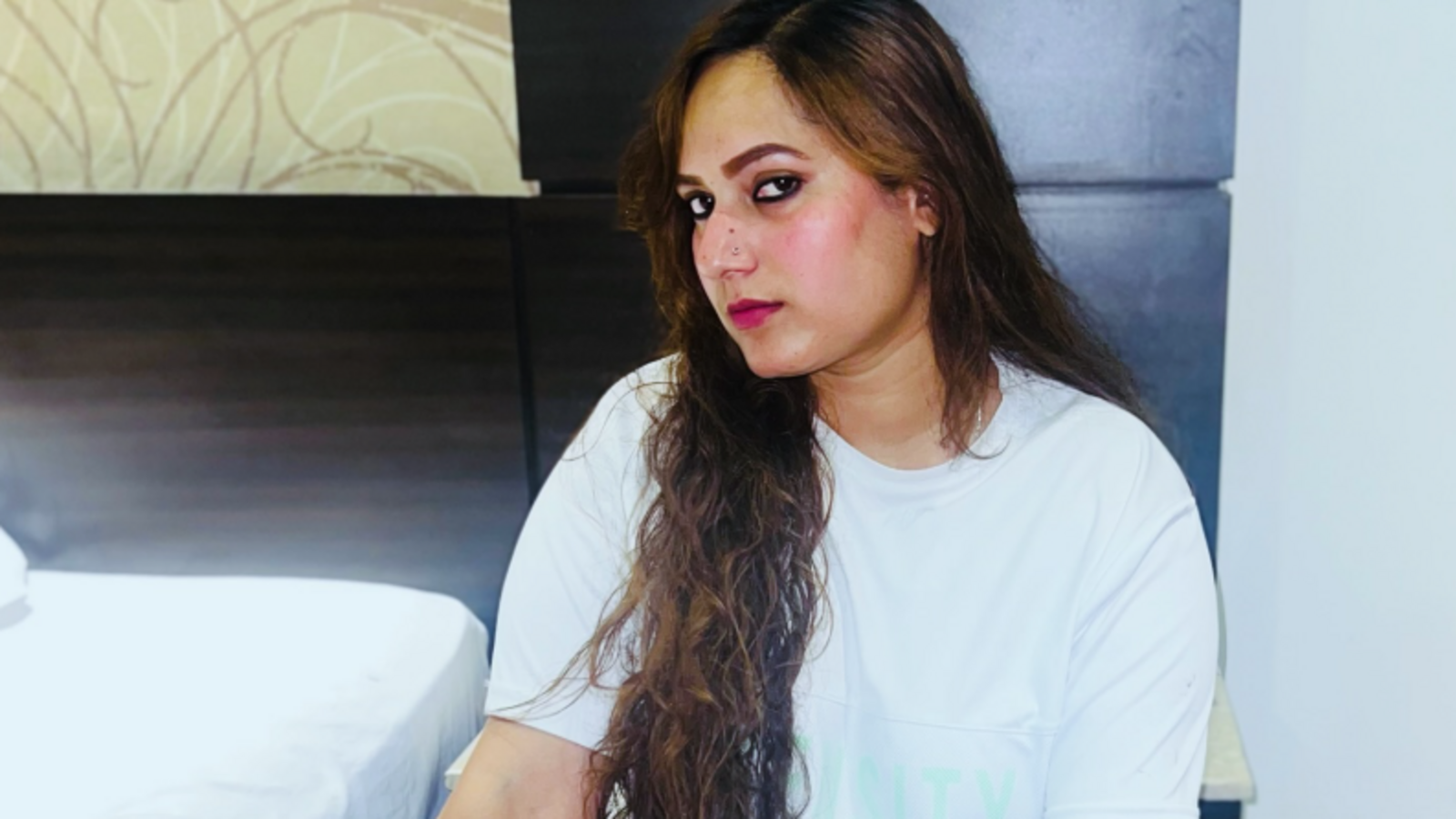
Popular yet controversial social media influencer Kamal Kaur Bhabhi, whose real name was Kanchan Kumari, was cremated far from her hometown with just three family members in attendance — a stark contrast to her 3.8 lakh followers online. The cremation, held quietly with help from government officials and Sahara Jan Sewa volunteers, marked a lonely end for a woman who once commanded massive attention on the internet.
Over the past few days, Kamal’s old videos — especially those with double meanings or bold content — resurfaced across social media, fueling intense backlash. Much of the criticism has come from radical Sikh groups and Nihang factions, who took issue not only with her style of content but also her use of the surname “Kaur”, which they say dishonoured Sikh traditions.
Amritpal Singh Mehron, believed to be the main conspirator behind her murder, justified the act in a now-viral video. “Our Gurus gave us the surnames Singh and Kaur to protect our faith. We cannot allow women from places like UP or Bihar to misuse these names for popularity,” he said, adding that the sacrifice of Sikh Gurus should never be forgotten in matters of cultural purity.
Once admired for her bold reels and humorous content, Kamal is now being shamed posthumously — even by many who once followed and praised her. Social media has become a battleground of morality versus freedom of expression, with YouTubers and influencers cashing in on her story through endless reaction videos and debates.
The case has highlighted deep divisions in society: while some consider the actions of the accused as moral policing or even “social reform,” others see it as an alarming attack on personal liberty, expression, and human rights.
Kamal Kaur Bhabhi’s death has now become a symbol of something much bigger — a debate over who decides what is acceptable on the internet, and whether violence can ever be a justifiable response to content someone finds offensive.