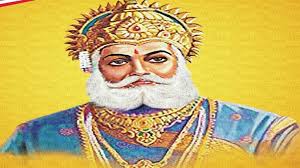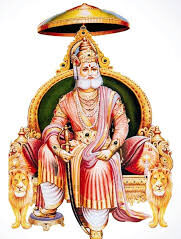
History of King Maharaja Agrasen.
The city of Agroha in modern-day Haryana was established by the mythical king Maharaja Agrasen around 5,000 years ago. The event, which is mostly observed by the Agrawal and Agrahari groups, commemorates his legacy as a kind and just ruler who established the values of social welfare and equality.
History of Maharaja Agrasen
- Birth and lineage: Maharaja Agrasen was born approximately 5,000 years ago, during the last stage of the Dwapar Yuga. He was a descendant of Lord Rama and the son of Pratapnagar’s King Vallabh Dev. Lord Krishna was a contemporary of Agrasen.
- Refusal of animal sacrifice: Goddess Mahalakshmi bestowed wealth upon Agrasen and his descendants following a time of severe penance. The goddess suggested that he adhere to the Vaishya dharma, or merchant’s way of life, as a condition. His opposition to ceremonial animal slaughter, which he had held since he was a young boy, was strengthened by this.
- Creation of Agroha: Agrasen established a thriving kingdom of traders and established the city-state of Agroha, which is now in the state of Haryana.
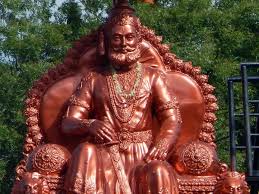
- The “one brick, one rupee” principle:To ensure the welfare of every citizen, Agrasen introduced the principle of “one brick and one rupee.” According to this system, every new family that settled in Agroha was given one brick and one rupee by each of the city’s inhabitants. This provided newcomers with the means to build a house and start a new business, promoting brotherhood and economic self-reliance.
- Origin of the Agrawal community: Agrasen fathered 18 sons, who in turn established the 18 gotras (clans) of the Agrawal community. The Agrawal and Agrahari communities regard him as their ancestor. Jayanti festival in Agrasen
- Date: Typically occurring in September or October, the festival is observed on the fourth day of the Ashwin month.
- Observance: The Jain, Agrawal, and Agrahari communities all eagerly commemorate Agrasen Jayanti. In a number of Indian states, including Haryana, Punjab, Rajasthan, and Uttar Pradesh, it is also a government holiday.
- Activities: Praying for prosperity to Goddess Mahalakshmi is part of the celebrations. community meetings, processions, and cultural activities. Agrasen’s values of equality and compassion are reflected in social welfare initiatives like food drives and free medical camps.
- Symbolic recognition: In 1976, the Indian government issued a postage stamp to honor Maharaja Agrasen’s 5100th Jayanti.