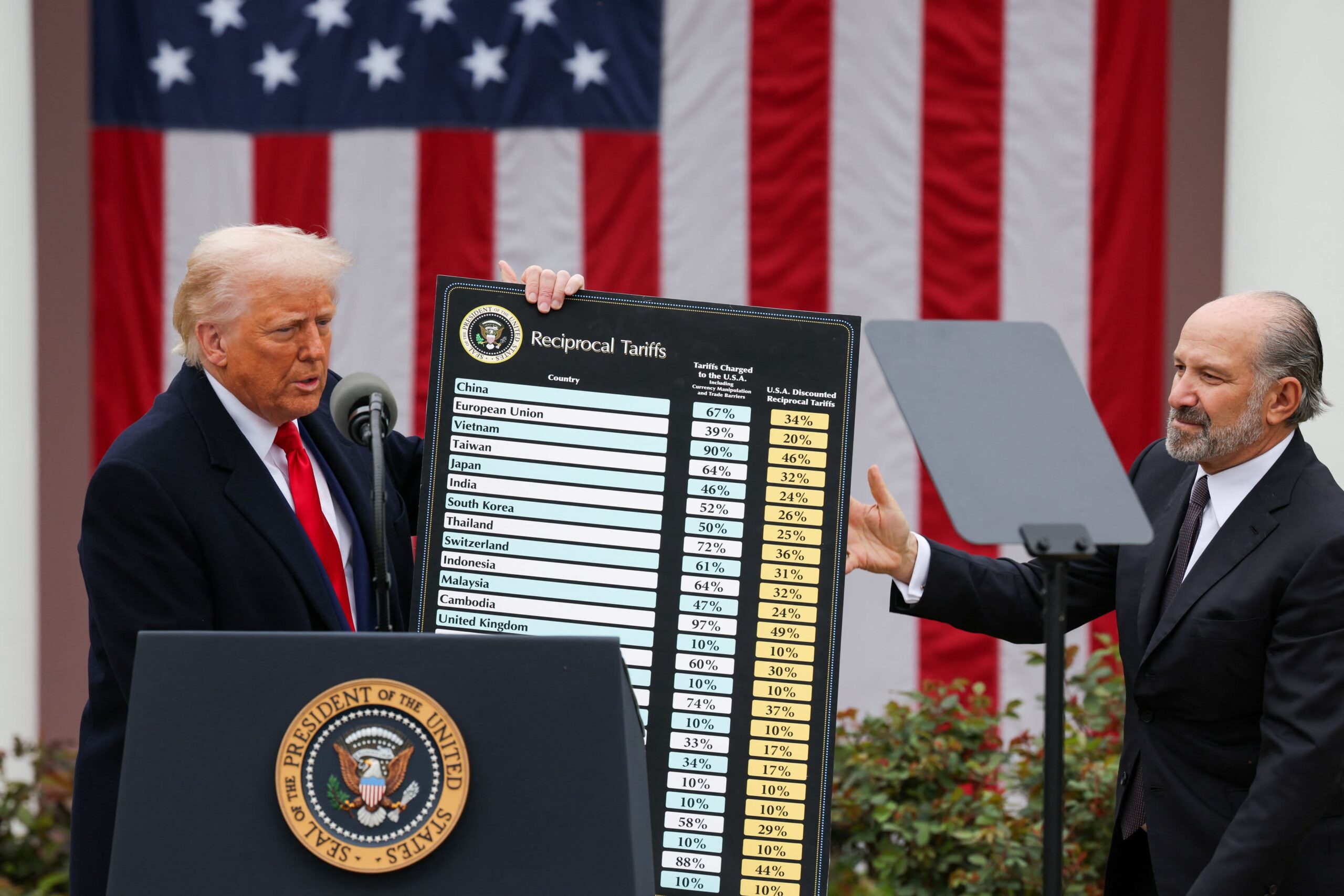
A roundtable discussion organized by the Centre for Advanced Studies in Social Science and Management (CASSM) at the CU-IDC Chandigarh campus highlighted the far-reaching implications of US President Donald Trump’s tariff hikes. The panel of experts expressed concerns that the ongoing tariff war has the potential to drastically reshape the global economic order, creating both opportunities and challenges, particularly for emerging economies like India.
The discussion focused on how these tariff confrontations are disrupting global supply chains, distorting comparative advantages, and generating widespread uncertainty in international markets. For India, the evolving trade tensions with the US could have significant ramifications, requiring the country to recalibrate its trade negotiations and adapt to a rising global tide of protectionism and inflationary pressures.
Prof Pramod Kumar, Chairperson of the Institute for Development and Communication (IDC), emphasized that the true impact of Trump’s tariff policy would extend beyond economic disruption, raising important political questions about the consequences for the emerging middle class, the rural poor, and working populations across the globe. He questioned whether a more nuanced tariff regime could foster equitable income redistribution, rather than merely escalating trade retaliations between the Global North and South.
Rajesh Mahapatra, a journalist and commentator, described Trump’s economic nationalism as a threat to both the American dream and the very fabric of the US economy. He argued that the tariff hike jeopardizes the consumption-driven middle class and undermines the vibrancy of American democracy, along with the US’s position as a global superpower.
Prof J.S. Bedi of IDC further analyzed how Trump’s tariff war is poised to redefine global comparative advantages. He highlighted that the shifts in cost structures and geopolitical alignments would likely prompt a reorientation of supply chains toward regions such as Europe, South and Southeast Asia, China, Brazil, and Russia. While these changes could create new challenges, they could also present fresh opportunities for countries like India.
However, Prof Sunil Kumar Sinha warned that the tariff war might stunt global economic growth, stoke inflation, and generate long-term instability in international markets. The experts underscored that the negative economic fallout could have broader consequences for the global middle class and marginalized populations.
Prof Abhijit Das critiqued the concept of a liberal global order, pointing out that the United States has historically been a protectionist and interventionist power, often pursuing its own interests at the expense of others. He questioned whether reciprocal tariffs would truly benefit India, suggesting that India’s trade negotiations with the US must be understood within the broader context of tightening global trade dynamics.
Prof Atul Sood echoed this sentiment, adding that the tariff hikes are part of a broader global trend of economic nationalism, which is increasingly manifested in militaristic trade policies. He warned that such protectionist measures would be structurally disadvantageous for emerging economies like India, which have limited negotiating leverage in a polarized economic landscape.
The experts concluded that while there may be opportunities for India to navigate the changing global trade environment, the consequences of Trump’s tariff war could lead to long-term economic instability, exacerbating existing inequalities and stalling global growth.