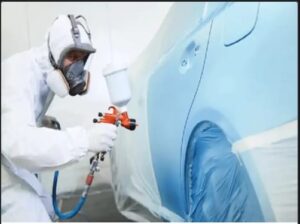
CPCC Takes Action on Spray Painting in Chandigarh: Work Not Allowed Without Booth and Permission; Unit Will Be Sealed for Breaking Rules.
The Chandigarh Pollution Control Committee (CPCC) has taken efforts to halt Chandigarh’s spray painting-related pollution. These days, no store owner can accomplish this task without setting up a booth or unit. Spray painting will require permission from the CPCC. There will be consequences for anyone who violates the guidelines.
In accordance with Section 31E of the Air (Prevention and Control of Pollution) Act, 1981, a notice will be issued and action will be taken against those who connect such individuals to electricity.
Understand the CPCC’s ruling on spray painting:
1. Permission is required for booth construction.
The Chandigarh Pollution Control Committee (CPCC) states that no individual, store owner, or unit owner in the vicinity may spray paint without setting up a booth and getting permission from the CPCC.
2. Take Action Against Electricity Connections Providers
Anyone seen engaging in outdoor spray painting without a paint booth or authorization will now face consequences, as will those who supply them with electricity. Their electricity supply may be cut off as part of this process.
3. It will be sealed.
Their unit will be sealed right away after the infractions. Additionally, Section 31E of the Air (Prevention and Control of Pollution) Act, 1981 will be used to take action.
Regarding spray painting-related air pollution, the CPCC is taking a strong stand. Do you want me to look for any formal news releases or documents that describe these new rules from the Chandigarh Pollution Control Committee (CPCC)? Indeed, the search findings support and explain the CPCC’s activities with regard to spray painting, which is seen as an industrial process that may contribute to air pollution.
Adverse Effects on Health
One of the main causes of air pollution is the dispersal of toxic gasses and small chemical particles during spray painting. These have a detrimental effect on other people’s health and lower the quality of the environment. These substances induce lung conditions, asthma, allergies, and headaches when they enter the body through the respiratory system.
They also damage water, soil, and trees, upsetting the natural equilibrium. Because of this, the Pollution Department enforces severe regulations to maintain clean air, protect public health, and ensure that commercial and industrial operations adhere to pollution control standards.