Stubble Burning Cases Cross 200 on the Third Day in Punjab: Highest in Tarn Taran this Season, CM’s Home District Ranks Second.
Over the past few days, Punjab has seen a steady increase in the number of incidences of stubble burning.
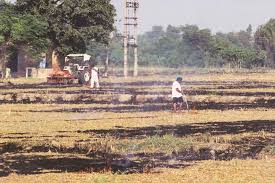
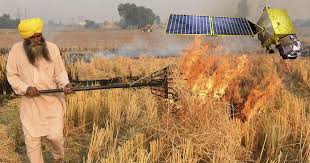
For the third day in a row, stubble burning incidences in Punjab have continuously surpassed 200. There are now 1,642 fields on fire this season after 224 fresh incidences were registered in the state on Friday. The Consortium for Research on Agroecosystem Monitoring and Modelling from Space (CREAMS) study is the source of this data.
Punjab is responsible for 86% of the 259 stubble burning incidences that have been reported in six states, according to the research. Chief Minister Bhagwant Mann’s home district, Sangrur, accounts for 63 of these incidents.
The report by CREAMS states that out of the total 1,642 cases of farm fires reported in Punjab this season, the maximum number is from Tarn Taran.
- Tarn Taran recorded 374 incidents.
- Sangrur (CM Bhagwant Mann’s home district) is second with 281 cases.
- Amritsar is third with 197 cases.
- Ferozepur has 167 cases.
- Patiala has 97 cases.
The figures for 2024 and 2023 for the same period (until October 31st) were significantly higher: 2,950 cases in 2024 and 7,673 cases in 2023.
Why Tarn Taran Has the Most Cases
According to officials, Punjab’s paddy harvest starts in the districts of Tarn Taran and Amritsar. There are more initial numbers because farmers in this area have less time to clean the fields.
The number of cases in the Malwa region (which includes Sangrur, Patiala, Bathinda, etc.) is currently lower but is predicted to rise quickly in the upcoming days because the paddy harvest there starts later.
Reduced Cases in Relation to Prior Years
Compared to prior years, there has been a decrease in cases this time. There were 7,673 instances in 2023 and 2,950 cases in 2024 during this time. There have been 44% fewer cases reported so far this year.
Despite the decrease in cases, experts predict that the impact on pollution will be significant because the first 15 days of November may see a dip in temperature and low wind speed, which might affect the quality of the air.