Ahoi Ashtami is a significant Hindu festival celebrated by mothers, primarily in North India, who observe a fast for the well-being, longevity, and prosperity of their children.
In the Hindu month of Kartik (or Ashvin, depending on the calendar used), which usually occurs four days after Karwa Chauth and eight days before Diwali, it is celebrated on the eighth day (Ashtami Tithi) of the waning moon fortnight (Krishna Paksha). Ahoi Aathe is another name for the day.
The festival’s whole history and significance stem from a legend known as Vrat Katha:
The Ahoi Mata Legend
The tale of a mother with seven boys is the most well-known legend:
The Error: A woman once went into a forest to dig dirt (or occasionally to get wood) in order to remodel and decorate her home a few days prior to Diwali.
The mistake and the Curse: She killed a wild animal’s young, usually referred to as a ‘hoglet’, ‘hedgehog’ (Syahu), or ‘lion cub’, by mistake while using her shovel to dig. The enraged animal cursed the woman, hoping she would experience the same loss.
The Tragedy: The family were devastated when the woman’s seven boys started to inexplicably pass away one after the other shortly after.
Repentance and Divine Counsel: Feeling guilty and heartbroken, the woman turned to a village elder or a knowledgeable saint for guidance. She was instructed to pray to Goddess Ahoi, who is said to be the protector of all children and is thought to be an incarnation of Maa Parvati or Goddess Lakshmi, and to follow a true fast. She was instructed to pray for forgiveness and sketch a picture of the newborn animal she had killed.
The blessing came as the mother sincerely repented of her sin and observed the fast with great devotion. She was blessed by Goddess Ahoi, who was moved by her devotion and faith. The curse was lifted, and her seven boys were brought back to life.
In order to obtain the divine graces of Ahoi Mata for their children’s safety and long life, women have since observed the Ahoi Ashtami Vrat (fast). “To spare” or “to forgive” are sometimes linked to the word “Ahoi” itself.
Conventional Evolution
Traditional Focus: Traditionally, the event was celebrated only for the sake of sons’ well-being and longevity.
Modern Shift: In light of shifting social views, the fast is now commonly followed for the welfare and success of all children, regardless of gender.
Couples without children: Women who have trouble getting pregnant or who want children also notice this quickly. On this day, they frequently seek the graces of the Goddess by taking a holy plunge in Mathura’s Radha Kund.
Customs and Holidays
From sunrise to sunset, mothers undertake a rigorous fast, commonly known as a nirjala vrat (without food or water). The following evening, the fast is broken:
During the auspicious Muhurat, the Ahoi Mata Puja is performed.
reciting or hearing the legend known as the Ahoi Ashtami Vrat Katha.
presenting the moon or stars with an arghya (water gift).
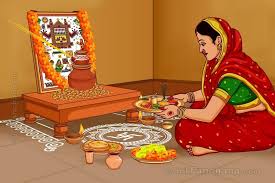
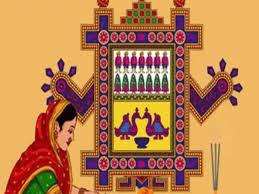
In the major puja, a picture of Ahoi Mata (usually with seven or eight children/dots) is drawn or placed on the wall, along with a water-filled Kalash (pot) and an earthen Karva (little pot), and the Goddess is offered sweets and seasonal fruits.