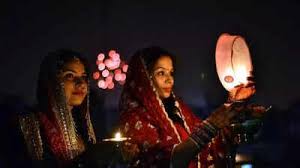
For the sake of their husbands’ longevity, health, and prosperity, married women in Northern ਭਾਰਤ observe a fast from sunrise until moonrise on Karwa Chauth, a prominent Hindu holiday.
The festival’s significance and complete history are as follows:
Origin and Etymology
Name: “Karwa Chauth” is a combination of two words:
A small earthen pot used to offer water to the moon during rituals is called a ‘karwa’ (or ‘karak’). It represents wealth and well-being.
Chauth, also known as Chaturthi, means “fourth,” since the celebration takes place on the fourth day following the full moon (Krishna Paksha Chaturthi) during the Hindu month of Kartika, which is often October or November.
Historical Context: Although the practice’s exact beginning is unknown, it is thought to be very old. According to several theories:
-
- Military Campaigns: It began as a prayer for the safe return and longevity of husbands who went to fight in distant wars.
- Crop Cycle: It coincides with the beginning of the Rabi crop cycle (wheat sowing) in Northwestern ਭਾਰਤ. The earthen pots (‘Karvas’) were also used to store wheat grains, leading to women praying for a good harvest as well as for their husbands.
- Sisterhood: The festival also gained importance as a day for women, often married off young into new, distant households, to foster a strong bond of friendship and sisterhood (Dharam-Behn) for mutual support.
Traditional Legends (Vrat Kathas)
Several mythological tales that are told at the evening Puja (worship) ceremony are interwoven with the festival’s significance:
1. The Story of Queen Veeravati
- The Fast: At her parents’ home, Veeravati, a stunning queen and the only sister to seven devoted brothers, celebrated her first Karwa Chauth fast. She became weak and started to faint as a result of the rigorous, all-day fast (without food or water—Nirjala).
- The Deception: Her loyal brothers deceived her into breaking the fast too soon since they couldn’t stand seeing their sister suffer. They convinced her that the moon had emerged by creating the appearance of a moonrise (by reflecting a mirror in a pipal tree or a fire on a hill).
- The Consequence and Redemption: Veeravati learned about the unexpected ਮੌਤ of her husband, the king, as soon as she broke her fast. She hurried to his mansion, heartbroken. She encountered Lord Shiva and Goddess Parvati along the journey, who told her the truth: her husband’s ਮੌਤ resulted from breaking the fast after he saw a false moon. Inspired by the queen’s remorse and devotion, Parvati gave her instructions to observe the Karwa Chauth fast once more with complete and steadfast devotion. Veeravati carefully followed the directions, and her husband’s life was restored as a result of her faith. This tale highlights the strength of a wife’s loyalty and the rigorous observance of the fast’s guidelines.
2. The Legend of Mahabharata (Draupadi)
- The Situation: Draupadi was worried about the Pandavas’ welfare as they were dealing with a lot of difficulties, and Arjuna had left for penance.
- Lord Krishna’s Advice: Draupadi turned to Lord Krishna for assistance, and he suggested that she observe the Karwa Chauth fast. He told her the tale of Goddess Parvati, who fasted for Lord Shiva’s protection and longevity. The Pandavas overcame their difficulties, and Draupadi devotedly observed the fast.
3. The Legend of Karva
- The Devoted Wife: There was a woman named Karva, whose intense devotion to her husband gave her spiritual power (Shakti).
- The Miracle: Karva hurried to the scene and tied the crocodile with cotton thread after it captured her husband while he was taking a river bath. Then, she begged Yama, the God of ਮੌਤ, to murder the crocodile so that her husband would have a long life. Karva threatened to curse Yama for his refusal. Yama gave up, banished the crocodile to hell, and granted Karva’s husband a long life out of fear of the fury of such a loyal wife. This tale demonstrates the tremendous strength of a devoted wife’s devotion.
Significance and Modern Observance
Karwa Chauth ਅੱਜ remains a vibrant celebration of love, commitment, and familial bonds.
- Fast (Vrat): Married women observe a Nirjala fast (without food or water) from sunrise until the moon is sighted in the evening.
- Sargi: The fast begins with Sargi, a pre-dawn meal of nourishing food and gifts traditionally given to the daughter-in-law by her mother-in-law, symbolizing blessings and acceptance.
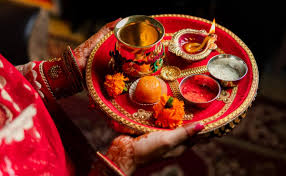
- Puja: In the evening, women gather, dress in traditional wedding or festive attire, apply mehndi (henna), and listen to the Vrat Katha (stories). They worship Goddess Gauri (Parvati) and offer prayers for their husband’s well-being.
- Breaking the Fast: Only after the moonrise is the fast broken. The woman offers Arghya (water offering) after first viewing the moon through a sieve (channi). Then she peers through the sieve at her husband’s face. In order to show his appreciation and affection for her loyalty, the husband finally breaks her fast by giving her a bite of food and the first sip of water.
While the core tradition remains, in modern times, the festival has evolved into a mutual celebration, with many husbands also fasting for their wives, symbolizing equality and shared commitment in marriage.