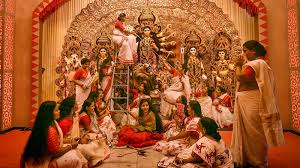
Why do Bengalis eat non-veg in Durga Puja when the whole country observes the Navratri fast?
navratri is just around the corner, and much of ਭਾਰਤ is preparing to observe nine days of fasting and devotion to the nine avatars of Ma Durga.
During this time, thalis across the country are dominated by sabudana khichdi, fruit platters, kuttu puris and other sattvik meals.
Silently, the meat, onion, and garlic vanish from the dishes. However, the story takes a dramatic turn when you go east to Bengal. Here, it signifies the start of Durga Puja, the biggest festival in the state. The aroma of simmering chicken curry, ilish machh, and kosha mangsho permeates the air from Bengali kitchens. This discrepancy may come as a surprise to many ਲੋਕ outside of Bengal. How can non-vegetarian cuisine be used to commemorate a celebration that has its roots in devotion?
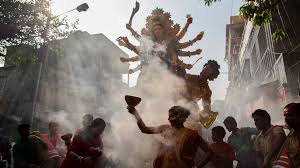
Eating meat and fish during Navratri is not seen as a sign of disobedience by Bengalis. It is customary and cultural and a celebration of Ma Durga’s return home. Feasting, not fasting, is how devotion is shown. Bengali Navratri is more about celebration than fasting; it’s not simply about abstinence and fasting. It is the prelude of Durga Puja, the most significant religious and cultural celebration in the area. In Bengal, Navratri is celebrated as a time of joy, indulgence, and community building, in contrast to the North Indian interpretation that places a strong focus on abstinence.
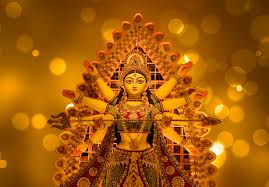
The Historical and Cultural Context: Bengali cuisine has been influenced by both history and geography. For ages, fish has been a staple of Bengali cuisine, which is surrounded by rivers and lush land. According to historian Nrisingha Bhaduri, eating meat and fish at religious festivals has long been regarded as a sign of heavenly favour in Bengal. Bengali tradition easily accommodates the notion that food may be both joyous and sacred.
Non-vegetarian offerings are really actively used in a lot of Bengali temple rites. Goat sacrifices, with the meat afterwards prepared and shared as prasad, are a common part of the worship of Kali, another furious manifestation of the goddess. Bhog, which includes fried vegetables, khichuri, and, in certain groups, even fish and meat, is used to honour Durga herself.
In contrast, vegetarianism is seen as the purest form of devotion in regions of ਭਾਰਤ that have been inspired by Vaishnavite traditions. In Bengal’s goddess-worshipping Shakta traditions, vegetarian and non-vegetarian offerings are regarded as equally sacred.
Bengal’s climate and eating habits from a practical standpoint. There is a utilitarian justification in addition to religious ones. Because of the region’s river-rich terrain and humid climate, fish are the main source of protein in Bengal. Generations of ਲੋਕ grew up believing that fish was not only food but also a necessary daily nutrition.
Bengal never adopted the practice of abruptly giving it up for the nine days of Navratri as other states did. Bengal’s abundance of rivers made non-vegetarian food both available and reasonably priced, in contrast to drier areas where vegetarian diets were more viable.