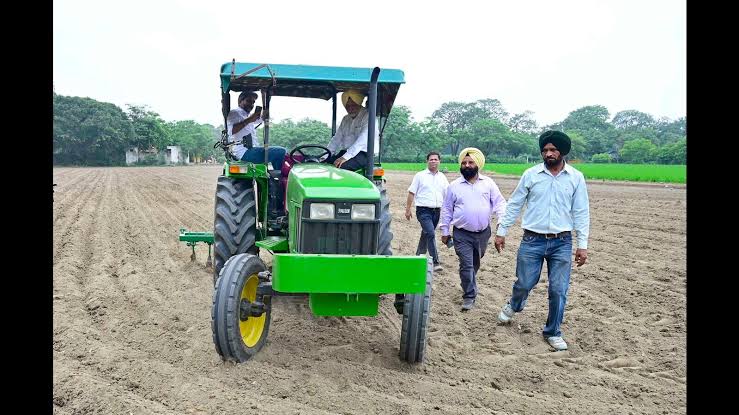
ਪੰਜਾਬ Agricultural University (PAU) ਅੱਜ demonstrated driverless tractors at its research farm, introducing a new Global Navigation Satellite System (GNSS)-based Auto-Steering System. This marks a big step in using digital technology and artificial intelligence (AI) in farming.
PAU Vice-Chancellor Dr Satbir Singh Gosal led the event, along with university scientists and officials. The auto-steering system, made by an American company, can be fitted to both old and new tractors. It costs around Rs 3.5 lakh.
Dr Gosal explained that the system uses satellite signals and sensors to guide the tractor along fixed paths. It works well even in low light and helps reduce driver tiredness, overlapping of work, and missed spots in the field.
The system has several parts including a GNSS receiver for correct positioning, a wheel angle sensor, and a motor to control the steering. A touchscreen console allows advanced features like automatic turning and skipping rows. The farmer can switch between manual and auto mode with one button.
According to field trials at PAU, the new system reduces overlap during work from 3–12% to about 1%. Missed areas also dropped from 2–7% to under 1%. Dr Gosal said this system can increase productivity and reduce physical effort for farmers.
PAU Registrar Dr Rishi Pal Singh mentioned that the university’s innovations were recently appreciated at the national level. Union Agriculture ਮੰਤਰੀ Shivraj Singh Chouhan had remotely operated PAU’s sensor-based paddy transplanter during a demonstration in Patiala.
Dr Manjeet Singh, Dean of the College of Agricultural Engineering, talked about their remote-controlled paddy transplanter. It allows farmers to operate it from shaded areas, helping them avoid heat and humidity during work.