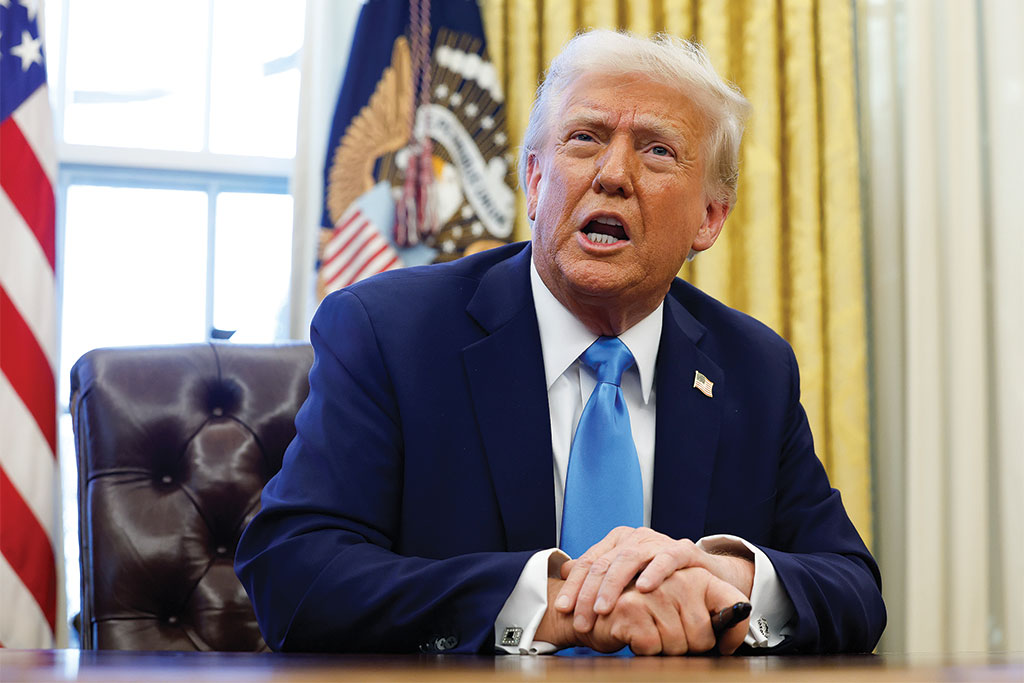
Just hours after BRICS leaders released the Rio de Janeiro Declaration criticizing rising trade tariffs and warning of damage to the global economy, US President Donald Trump responded with a sharp warning on Monday.
Trump posted on, saying:
“Any Country aligning themselves with the Anti-American policies of BRICS will be charged an ADDITIONAL 10% Tariff. There will be no exceptions to this policy. Thank you for your attention to this matter!”
He didn’t explain exactly which policies he considers “anti-American,” but his reaction came shortly after BRICS criticized the US’s growing use of tariffs.
In their joint statement, BRICS leaders said that rising tariffs and trade barriers could disrupt global supply chains, reduce trade, and create more economic uncertainty. Though the declaration didn’t directly name the United States, its message was widely seen as a clear critique of American trade policy under Trump.
The BRICS declaration also voiced strong support for a fair and rules-based global trading system led by the World Trade Organization (WTO). It stressed the importance of a transparent, inclusive, and equal system, especially one that supports developing countries.
“We reiterate our support for the rules-based, open, transparent, fair, inclusive, equitable, non-discriminatory, consensus-based multilateral trading system with the WTO at its core,” the BRICS leaders said.
About BRICS:
Originally formed in 2009 with Brazil, Russia, ਭਾਰਤ, China, and South Africa, BRICS expanded in 2024 to include Egypt, Ethiopia, Indonesia, Iran, Saudi Arabia, and the UAE. With 11 countries now, the group represents:
-
49.5% of the global population
-
Around 40% of global GDP
-
About 26% of international trade
The bloc is increasingly being seen as a counterbalance to Western economic power, especially the G7, and is pushing for a more multipolar world order.