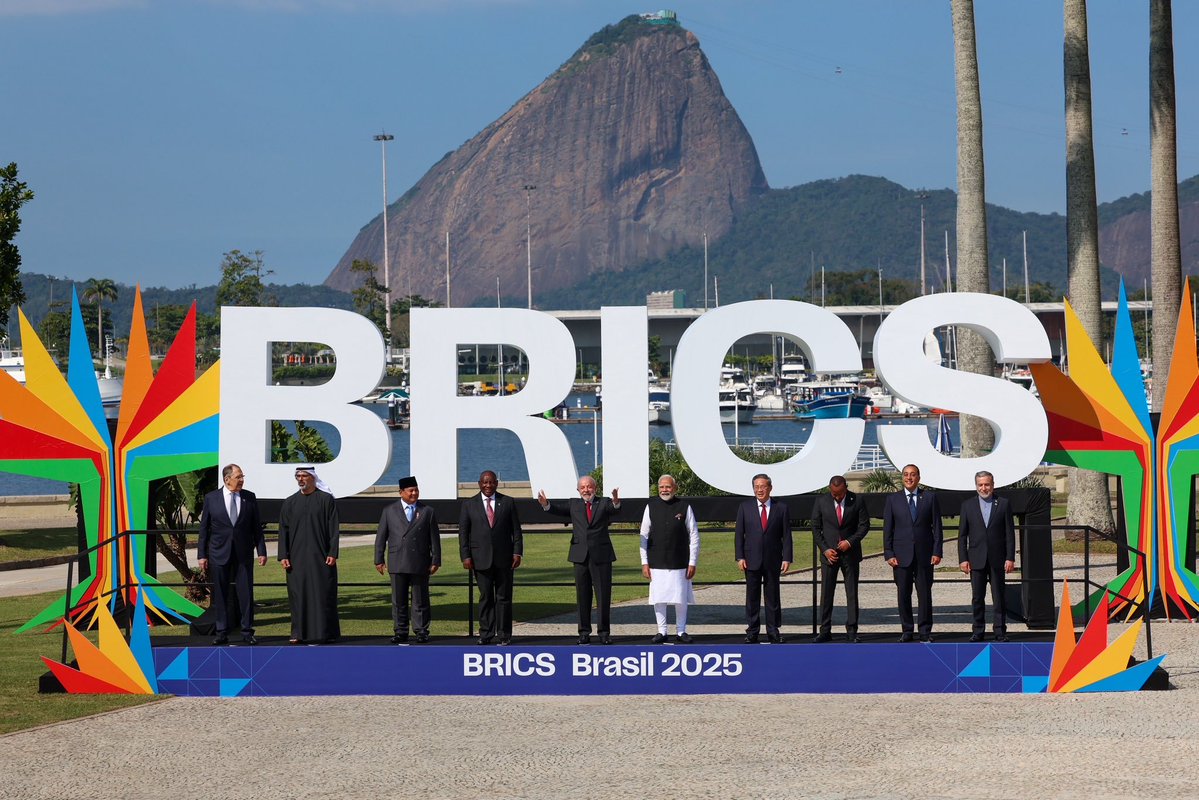
At the BRICS Summit held in Brazil on Sunday, member countries strongly condemned the April 22 terror attack in Pahalgam, Jammu and Kashmir, which claimed the lives of 26 civilians. However, the joint statement did not mention Pakistan, a country that ਭਾਰਤ has repeatedly blamed for supporting cross-border terrorism.
This is similar to what happened at the Quad Foreign Ministers’ meeting on July 2, where the Pahalgam massacre was condemned, but Pakistan’s name was again left out.
At an earlier SCO (Shanghai Cooperation Organisation) meeting on June 26, there was no mention of the Pahalgam attack at all, nor of Pakistan’s role. Defence ਮੰਤਰੀ Rajnath Singh even refused to sign the final SCO statement because it ignored the terror incident completely.
Observers say China’s strong influence in both BRICS and SCO may be the reason for Pakistan being spared in such statements. China is a close ally and strategic partner of Pakistan.
In the joint BRICS declaration, members pledged “zero tolerance” for terrorism and called for a global effort to fight extremism. The statement condemned terrorism in all its forms and demanded action against cross-border terrorism, terror financing, and safe havens. It also pushed for stricter action against UN-designated terrorist groups and individuals.
Prime ਮੰਤਰੀ Narendra Modi arrived in Rio de Janeiro on Sunday to attend the two-day summit and praised Brazilian President Lula for hosting the event. “BRICS remains a powerful force for economic cooperation and global good,” Modi said.
Other major topics discussed at the summit included:
-
The Israel-Iran conflict
-
The humanitarian crisis in Gaza
-
Concerns over trade tariffs imposed by the US, especially under former President Donald Trump
The BRICS nations strongly criticized “unilateral tariffs and non-tariff measures”, saying they distort global trade and go against WTO rules.
The declaration also called for urgent reforms in the United Nations Security Council (UNSC). BRICS members said the UNSC should become more democratic and inclusive, especially to give a stronger voice to countries from Africa, Asia, and Latin America.
Importantly, the declaration expressed clear support for ਭਾਰਤ and Brazil to play a larger role at the UN, including in the Security Council.
BRICS, which started in 2009 with five founding countries — Brazil, Russia, ਭਾਰਤ, China, and South Africa — has now expanded to include Egypt, Ethiopia, Indonesia, Iran, Saudi Arabia, and the UAE. The group represents nearly half the world’s population and about 25% of the global economy, and it positions itself as a voice of the Global South and a counterbalance to the G7, the group of powerful Western economies.