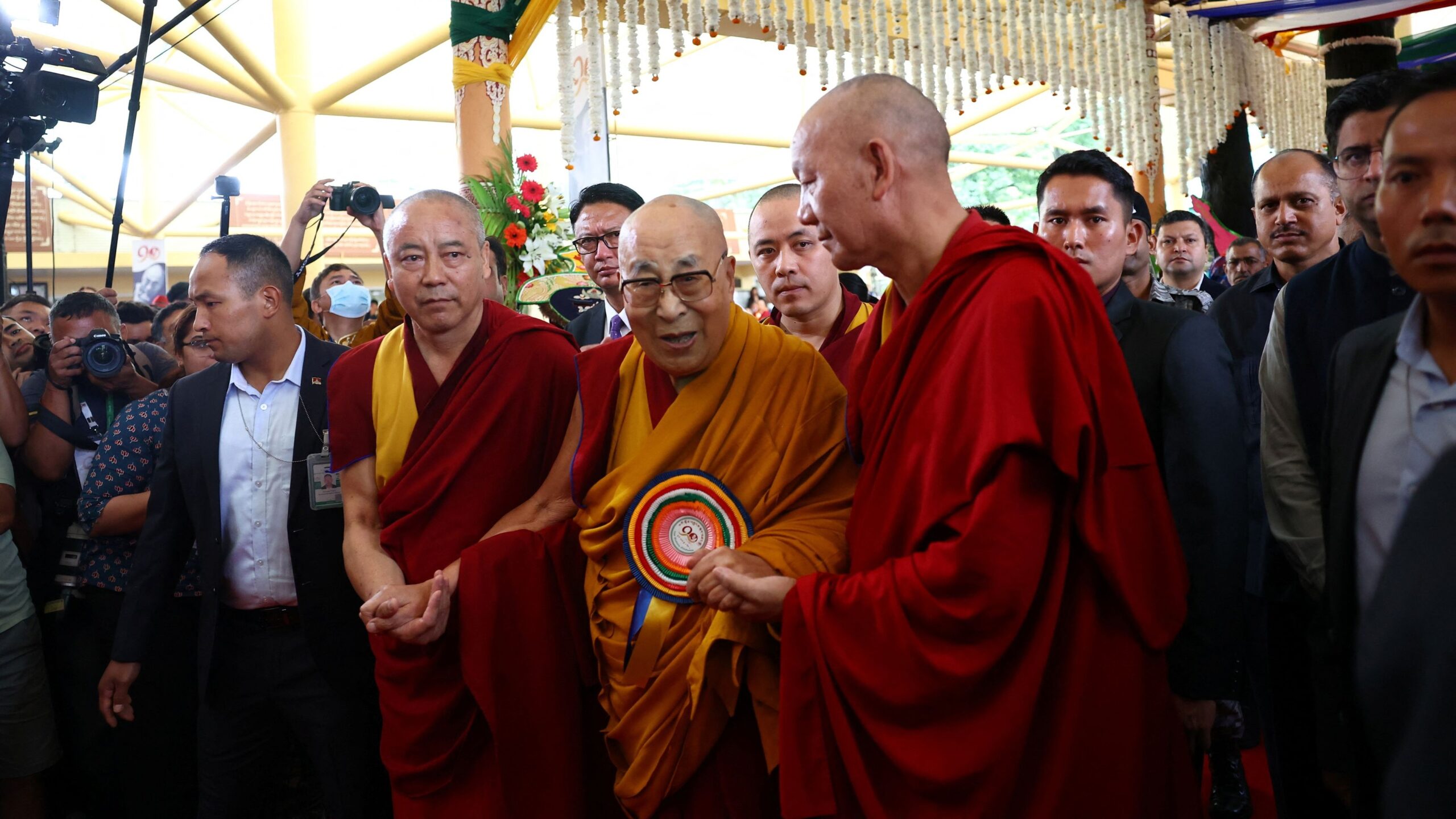
The spiritual leader of Tibetan Buddhists, His Holiness the 14th Dalai Lama, celebrated his 90th birthday on Sunday with heartfelt tributes, global messages of support, and week-long festivities in Dharamsala. The revered Nobel Peace Prize laureate used the occasion to express his hopes for a long life, continued service to humanity, and a clear message about his future reincarnation — a subject of deep spiritual and geopolitical importance.
Despite China’s longstanding opposition to his leadership, the Dalai Lama remained upbeat and focused on peace and compassion. “I am just a simple Buddhist monk,” he said in a birthday message posted on his website, reaffirming his lifelong dedication to human values, religious harmony, and the Tibetan cause.
Global Celebrations and High-Profile Guests
Thousands of followers, monks, well-wishers, and dignitaries from around the world gathered in Dharamsala, his longtime home in exile since fleeing Tibet in 1959 after a failed uprising against Chinese rule. Among the prominent attendees were Indian ministers and Hollywood actor Richard Gere, a long-time supporter of the Dalai Lama and Tibet.
The birthday events included cultural performances, prayers, and speeches, with the Dalai Lama scheduled to address his followers during the celebrations.
Modi, Rubio Among World Leaders Sending Wishes
World leaders extended birthday greetings, acknowledging the Dalai Lama’s enduring influence. Prime ਮੰਤਰੀ Narendra Modi posted on X (formerly Twitter):
“I join 1.4 billion Indians in extending our warmest wishes to His Holiness the Dalai Lama on his 90th birthday. He has been an enduring symbol of love, compassion, patience, and moral discipline.”
U.S. Secretary of State Marco Rubio praised the Dalai Lama’s legacy, stating:
“He continues to inspire ਲੋਕ around the world by embodying a message of unity, peace, and compassion.”
Rubio also reiterated America’s commitment to protecting the rights and freedoms of Tibetans, including their right to freely choose their religious leaders without external interference.
Reincarnation and Resistance to Chinese Interference
The Dalai Lama’s succession was a central theme during the birthday week. On Wednesday, he addressed growing concerns among followers by declaring that he will reincarnate and that only his Gaden Phodrang Trust — not any ਸਰਕਾਰ — holds the authority to recognize his successor.
This message directly counters China’s claim that it must approve the next Dalai Lama, a stance widely criticized by the Tibetan diaspora and the international community.
The U.S. has urged Beijing to stop interfering in Tibetan religious affairs, particularly in the selection of future spiritual leaders. American officials have consistently supported Tibet’s right to preserve its distinct cultural, religious, and linguistic identity.
A Life of Compassion and Quiet Defiance
Now entering his tenth decade, the Dalai Lama remains one of the most respected global figures, known not just for his spiritual leadership but also for his message of peace, nonviolence, and interfaith dialogue.
While Beijing continues to brand him a separatist, he has long advocated a “Middle Way” approach — seeking autonomy, not independence, for Tibet within the framework of the Chinese constitution.
As his birthday drew global attention, the Dalai Lama left his followers with a sense of calm certainty. He may no longer hold political office, but his spiritual presence continues to serve as both a guiding light for Tibetans and a quiet challenge to authoritarianism.