The Aam Aadmi Party (AAP) has come out strongly in defence of its controversial decision to appoint Punjab’s Chief Secretary as the Chairperson of all local housing and urban development authorities. The move, which has sparked political uproar, is being framed by AAP as a step to streamline governance and speed up decision-making in urban development.
“Not a Power Grab, But an Efficiency Move”
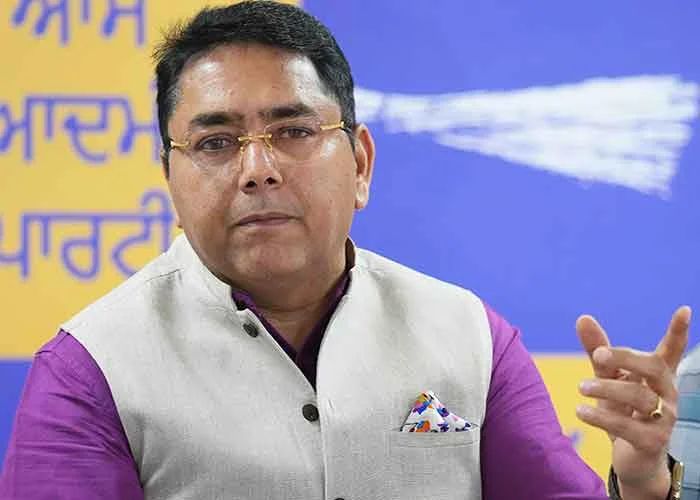
Renewable Energy Minister and AAP Punjab president Aman Arora explained that the change, which involves amending Section 29(3) of the Punjab Regional and Town Planning and Development (PRDPT) Act, was necessary to eliminate delays in development work. “While the Chief Secretary may clear proposals, final approval still lies with the Cabinet and the Punjab Urban Development Authority (PUDA), which is chaired by CM Bhagwant Mann himself,” Arora said. “So how is the CM’s authority being undermined?”
Opposition Cries Foul
Opposition parties, however, are not convinced. Congress and Shiromani Akali Dal (SAD) have accused AAP’s national leadership, especially Delhi CM Arvind Kejriwal, of stripping Punjab CM Bhagwant Mann of his powers under the guise of reform.
Congress MLA Pargat Singh alleged, “This is the first time in Punjab’s history that a Chief Minister’s powers have been taken away — just to make way for land grabs.” He questioned whether Mann was sidelined for opposing policies that would harm villages and farmland.
SAD leader Daljit Cheema called the Cabinet’s decision “unconstitutional and illegal,” saying it violates Section 4(2) of the 1995 Act that clearly establishes the CM and Housing Minister as chair and vice-chair of the Board. “How can a bureaucrat preside over a body where Cabinet Ministers are members?” he asked.
Government Ministers Push Back
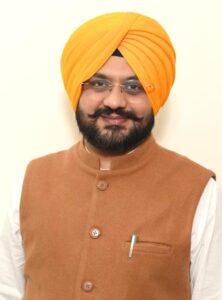
Punjab’s Education Minister Harjot Singh Bains defended the decision, accusing SAD of double standards. “Those who misused the system during their rule are now crying foul when we bring people-first policies,” he said.
Finance Minister Harpal Singh Cheema called it a “visionary step” that decentralises governance and strengthens the administrative system. “The CM is focused on big-picture planning. This reform allows day-to-day issues to be addressed swiftly by the administrative heads on the ground,” he said.
The Cabinet has also approved a new uniform structure for all eight Urban Development Authorities in Punjab, adding Deputy Commissioners and Municipal Commissioners as key members — a move officials say will make local-level decisions faster and more efficient.
Model Followed in Other Cities
AAP leaders also pointed out that similar governance models exist in cities like Noida, Ahmedabad, Kanpur, and Bangalore, where urban bodies are headed by senior IAS officers or ministers — not the Chief Minister. “This is a tested and effective model,” said Cheema.
As political tensions rise, the debate reflects a broader tussle between centralisation of control and decentralised administration — with AAP arguing for efficiency, and Opposition leaders warning of democratic dilution.