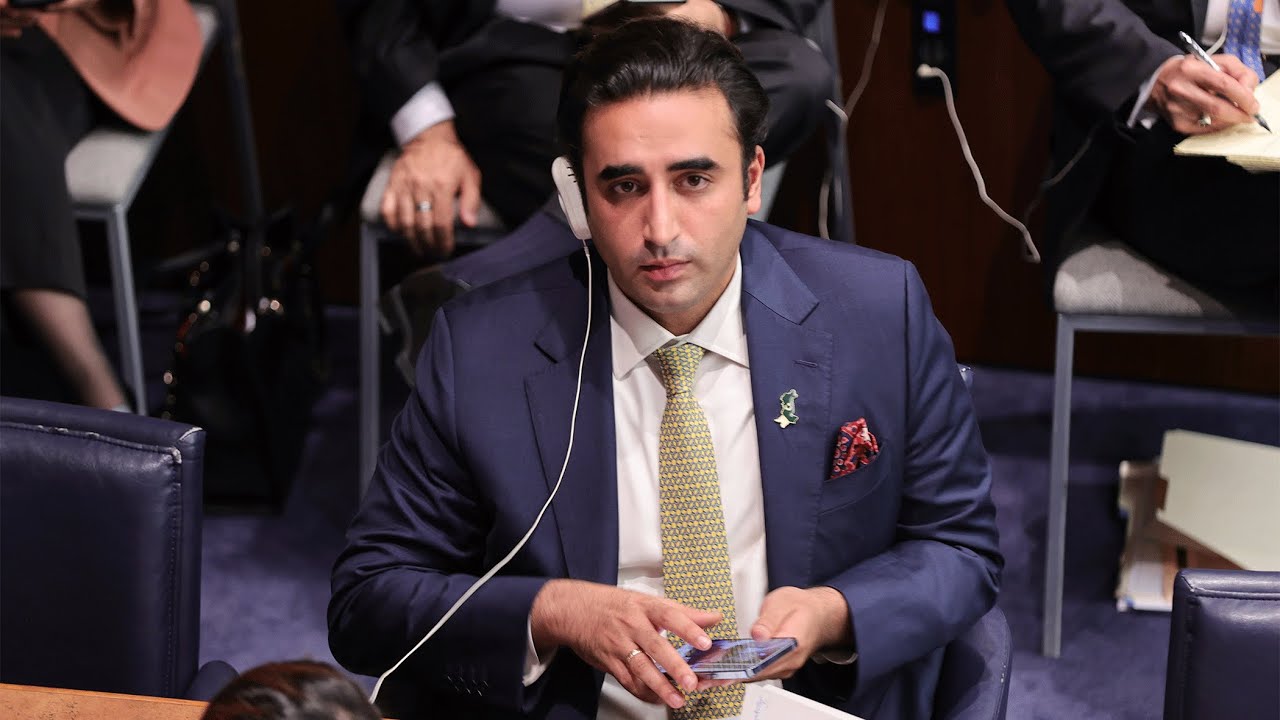
On the day an Indian all-party delegation led by Congress MP Shashi Tharoor arrived in Washington, DC as part of its global outreach on Operation Sindoor, a parallel effort was underway in New York by Pakistan. Former Foreign ਮੰਤਰੀ Bilawal Bhutto Zardari led a Pakistani delegation to the United Nations, making a renewed pitch for peace and talks with ਭਾਰਤ.
Bhutto’s softer tone comes in the wake of Pakistan’s reported military losses following its attempted retaliation after ਭਾਰਤ’s Operation Sindoor — a mission launched in response to the Pahalgam terror attack that killed 26 civilians. According to ongoing analysis, the Indian Air Force inflicted significant damage on the Pakistan Air Force, including the destruction of six fighter jets, two high-value aircraft, a C-130 transport aircraft, over 10 UCAVs (unmanned combat aerial vehicles), and several cruise missiles.
Speaking at the UN Headquarters, Bhutto acknowledged the destructive aftermath and emphasized the need for reconciliation. “Pakistan would still like to cooperate with ਭਾਰਤ to combat terrorism,” he said. “We can’t leave the fate of 1.5 to 1.7 billion ਲੋਕ in the hands of non-state actors and terrorists.”
In what appeared to be a tacit admission of the terror networks operating from Pakistan, Bhutto’s comments indirectly validated ਭਾਰਤ’s claims that the Pahalgam attack was planned by operatives based across the border. ਭਾਰਤ has repeatedly warned that any future terror attack would result in a decisive response.
Still, Bhutto stressed the importance of setting up formal channels for dispute resolution, especially between two nuclear-armed nations. “You can’t have no dispute resolution mechanisms,” he said, warning against leaving matters to escalate uncontrolled.
In a surprising and ironic turn, he also suggested that intelligence agencies from both sides — Pakistan’s ISI and ਭਾਰਤ’s RAW — could work together to curb terrorism. “I am completely confident that if ISI and RAW were ready to sit down and work together… we would see a significant decrease in terrorism in both ਭਾਰਤ and Pakistan,” Bhutto stated.
His statements reflect Pakistan’s increasingly difficult position following the fallout from Operation Sindoor. With ਭਾਰਤ taking the diplomatic lead globally and Pakistan seeking a way to de-escalate, the contrast in narratives is stark — ਭਾਰਤ reinforcing its right to defend against terrorism, and Pakistan now advocating for talks and cooperation in the face of mounting pressure.