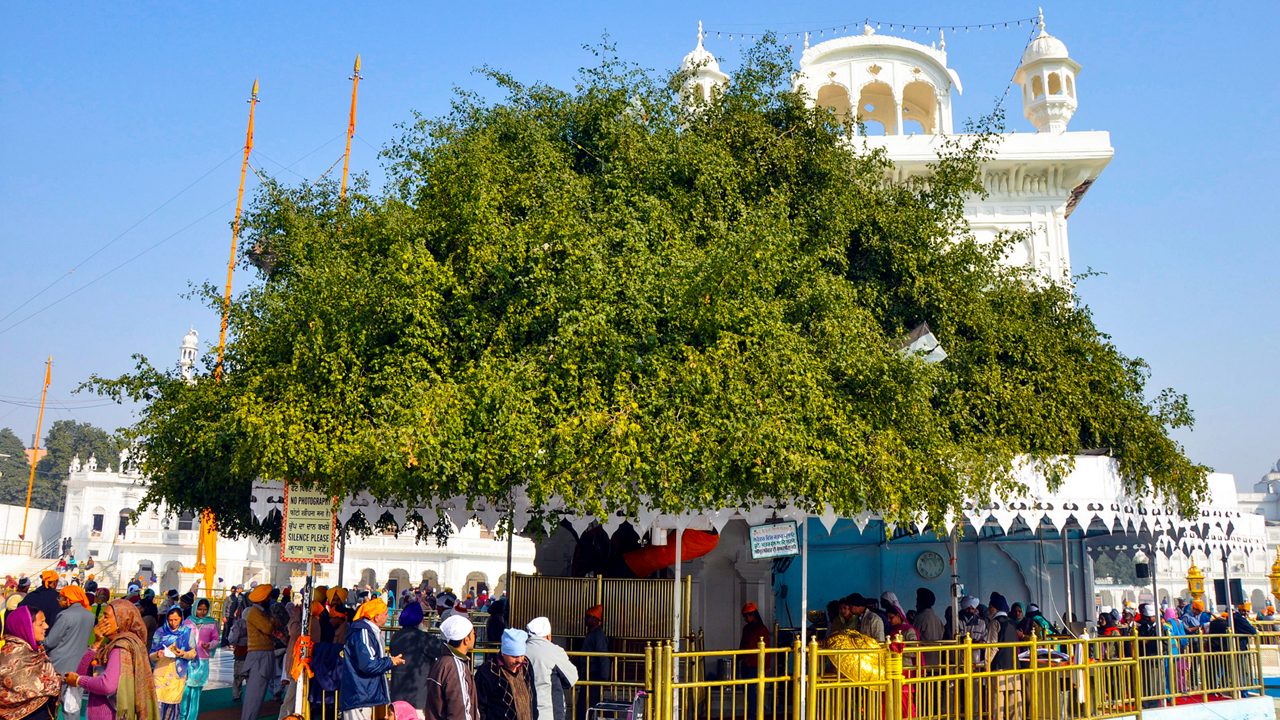
A new tamarind (imli) sapling has been planted in front of the Akal Takht at the Golden Temple complex, where a centuries-old historic tamarind tree once stood before it was destroyed during Operation Bluestar in 1984.
This is the latest attempt to revive the symbolic tree. A tamarind sapling was first planted around the year 2000 after the Akal Takht was rebuilt by the Damdami Taksal in 1998. However, that plant struggled over the years and finally dried up during the harsh winter of 2023.
From 2009 to 2013, Dr Narinderpal Singh from the Farmer Advisory Service Centre looked after the sapling. Later, experts from Punjab Agricultural University (PAU) also tried to help it survive. Despite several efforts, including the use of special growth treatments and protective coverings in winter, the plant could not adapt to the local soil and cold climate.
Bhagwant Singh, manager of Sri Darbar Sahib, said the earlier sapling had shown some growth between 2017 and 2020 but kept deteriorating during the winters. “Even with help from experts, the tree was unable to survive the frost,” he said.
Dr Karanbir Singh, a fruit science expert from PAU who has been monitoring the site since 2013, explained that the earlier plant was a domesticated tamarind variety, which is more sensitive to cold. He said a wild tamarind type from hilly areas would have been more suitable.
This time, a new sapling has been planted with better planning. A deep six-foot-wide pit was filled with fresh soil, and a cold-tolerant tamarind variety was selected. The SGPC has been advised to protect the plant from frost between December 10 and January 20 by covering it while keeping one side open for air. If needed, white acrylic sheets may also be used.
Dr Karanbir said the new plant looks healthy and will be closely monitored for a year. If it fails again, a different, more resilient variety may be planted.
The original tamarind tree had great historical and emotional significance. According to Sikh historians, it stood during the time of the Sikh Gurus and witnessed important events, including Guru Hargobind Sahib’s founding of the Akal Takht.
One famous story connected to the tree tells how Akali Phula Singh, then Jathedar of the Akal Takht, once tied Maharaja Ranjit Singh to the tree as punishment for his relationship with a dancer named Moran. Sikh historian Giani Gian Singh described the tree in his 1889 book Tawarikh Amritsar, noting that it stood beside a marble fountain that was often perfumed with rose water.
Now, with hope and careful effort, the community is trying once again to bring this living symbol of Sikh history back to life.