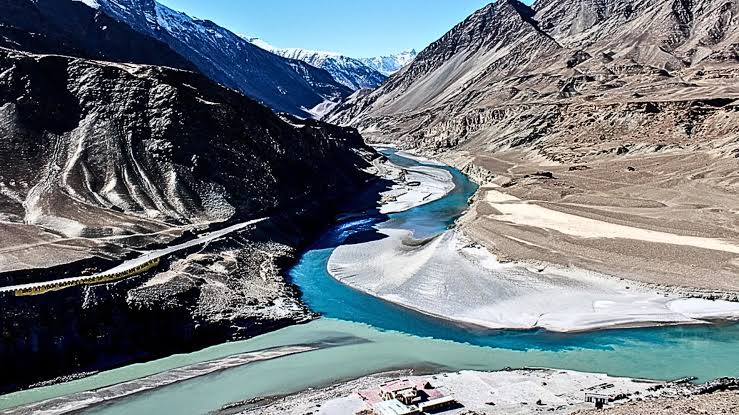
A day after India suspended the Indus Waters Treaty of 1960 in response to the Pahalgam terror attack, the government has started looking into how it can implement this decision. By putting the treaty on hold, India is no longer required to follow its terms.
This move means India can now plan new projects to store or divert water from the western rivers — Indus, Jhelum, and Chenab — which were earlier given to Pakistan under the treaty. However, officials clarified that this doesn’t mean the water flow to Pakistan will stop immediately. Any changes would take time and depend on the feasibility of such projects.
The Indus Waters Treaty had divided six rivers between the two countries. India got the eastern rivers — Ravi, Beas, and Sutlej — while Pakistan got the western ones. These western rivers are crucial for Pakistan, as they support 80% of its agriculture, 21% of its GDP, and 45% of its workforce.
Experts say that India cannot suddenly stop water flow, but it can now start studies and planning for long-term projects, which were not possible earlier. These projects may take many years to complete, but suspending the treaty is seen as a strong first step.